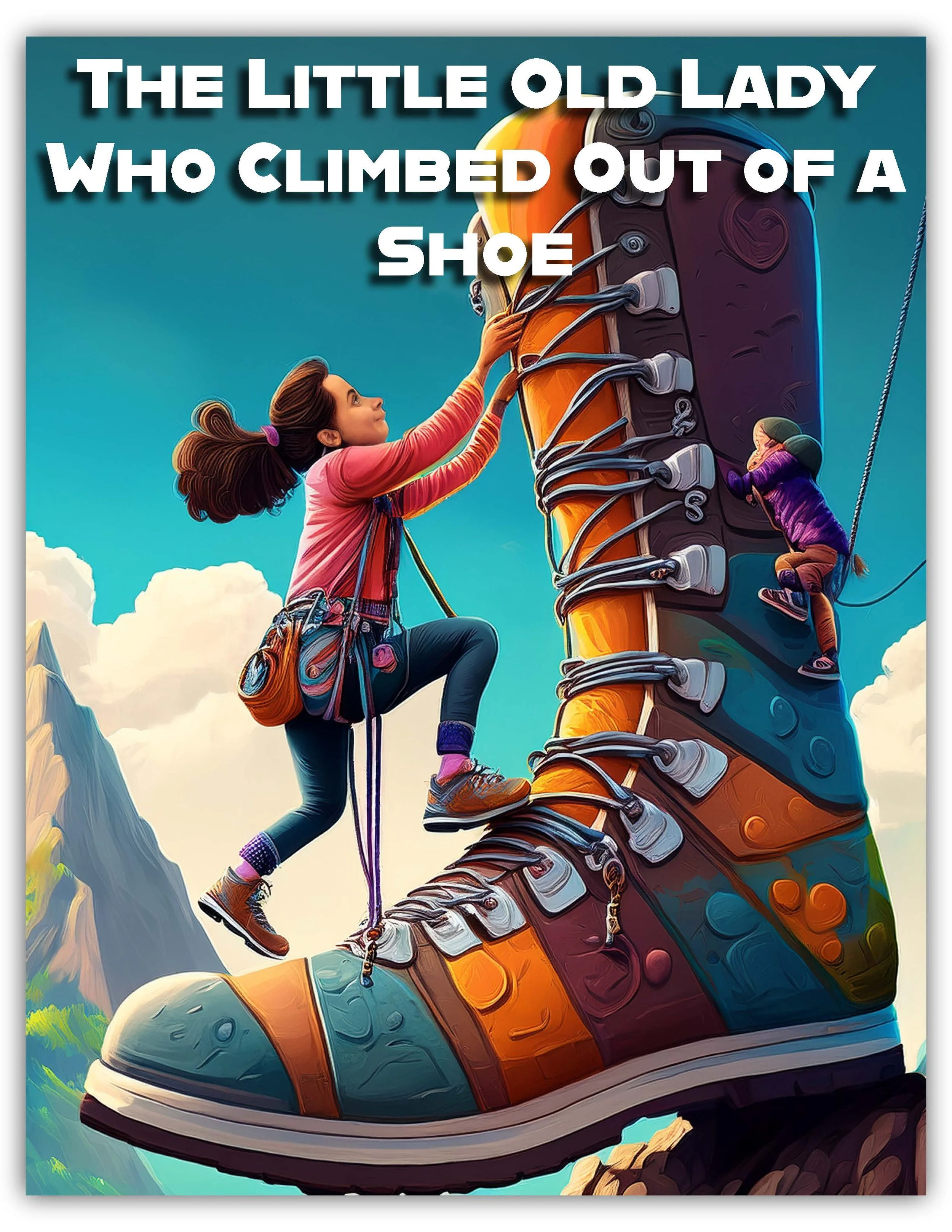
The Little Old Lady
I know the picture book market is precarious with the onset of various new tech advances. But the publishing industry has always faced barriers and challenges, and, so, this is just yet another to overcome. I admire those who are seeking writers from marginalized communities and feminist literature. And, as I get older, I also consider ageism. I feel and have felt the marginalization and discrimination of women. It has been a part of my life since the first time someone told me I couldn’t climb trees because I am a girl (I climbed it anyway).
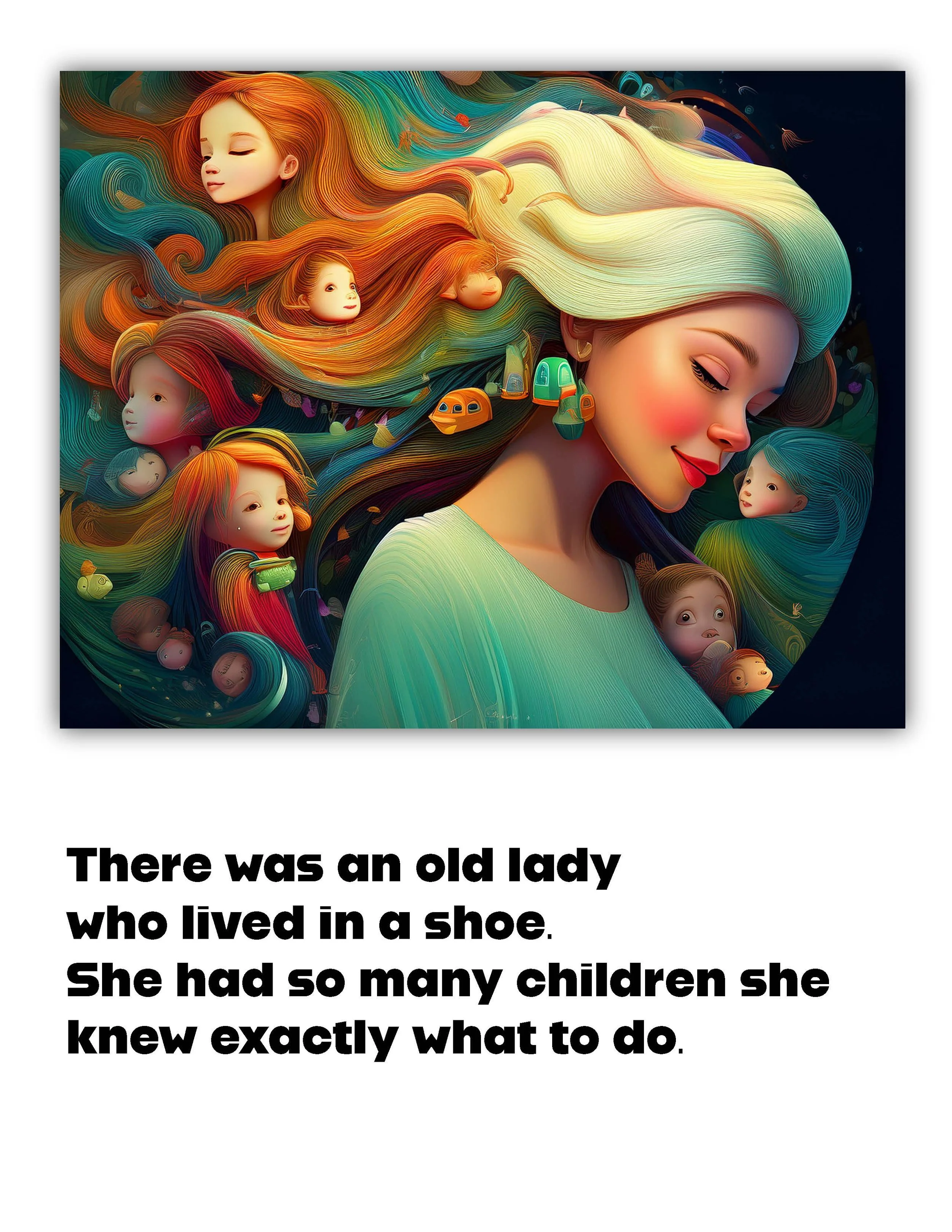
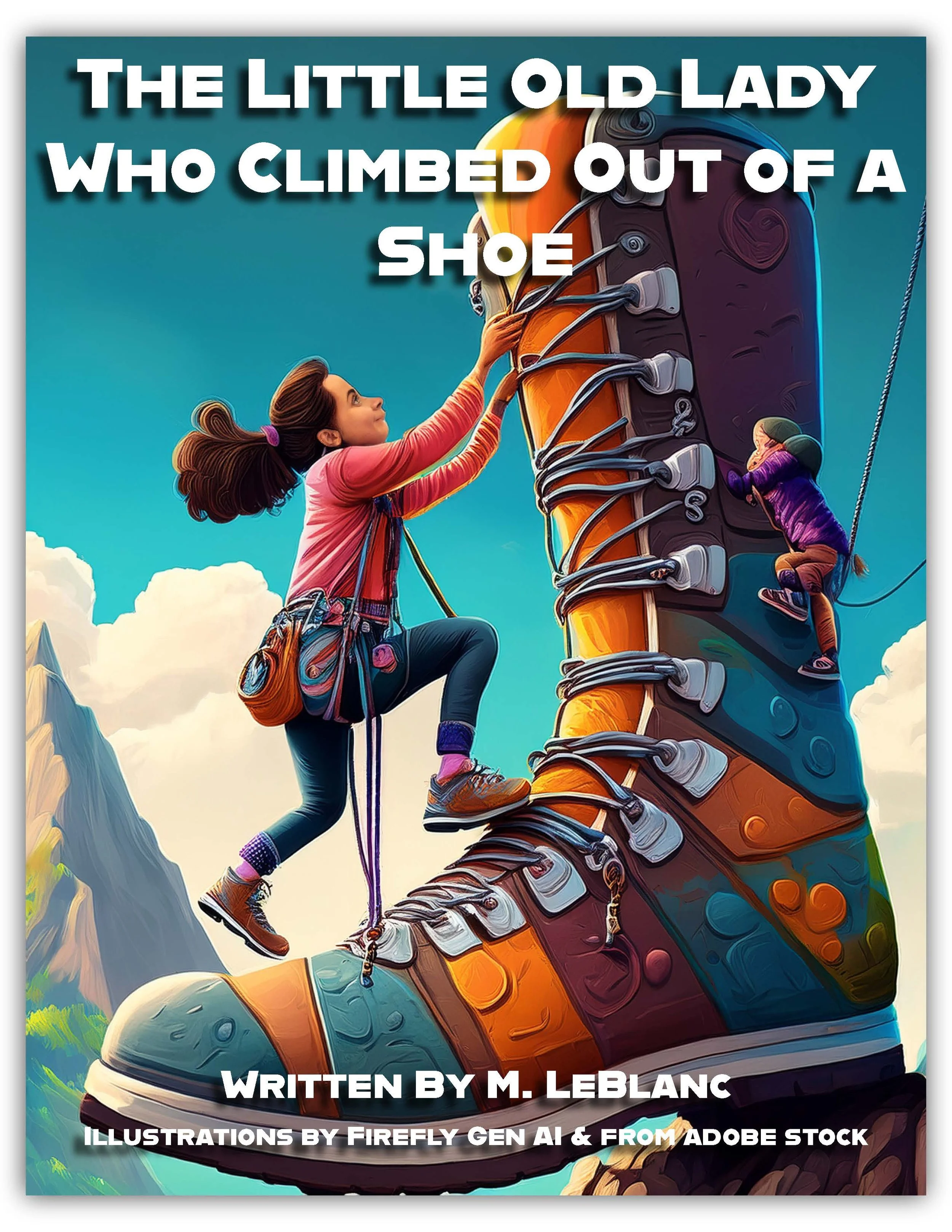
I have an idea for a series that addresses our need and ability to break out of the box. It came about because, as a 2nd grade teacher, our pod wanted to make “The Little Old Lady Who Lived in a Shoe” our theme for the October 31st dress up day. I wasn’t really into that, so I drafted “The Little Old Lady Who Climbed Out of the Shoe”, and whipped up some graphics via my Adobe products, and sent it to the office for color printing. I wore my harness with quickdraws and boots, and brought my rope and glacier crampons and helmet. The last two years I did this and was a female glaciologist (Dr. Ulyana Horodyskyj Peña). My students loved it! I showed them images of her work and, separately, my time in Alaska. I could see their imaginations light up!
Climbing may be a niche market, but has been a growing market that I have been watching since my first experiences climbing in 1990 as a college student learning all about NOLS and the iconic Freedom of the Hills mountaineering book. Indoor climbing gyms were just sprouting up. Now they seem ubiquitous. Ironically, indoor climbing is such a small part of the bigger history of climbing and mountaineering. I have only experienced bits and pieces of it. However, during the pandemic, from 2020 to about 2022, I was lucky enough to land a hybrid job in Valdez, Alaska. One of my responsibilities was to run the Valdez Ice Climbing Festival. Of course, I met many athletes and enthusiasts. Not only that, Access Fund, American Alpine Club, and other brands and organizations were there.
In my life, I have enjoyed many recreational sports. I might put the Little Old Lady through them for more stories. I have some in mind. This little old lady can bicycle away from the shoe, she can swim away from the shoe, she can run away from the shoe. I also love nature. This little old lady can plant trees around her shoe, care for the wildlife around her shoe, and create a food forest or garden for her shoe. The shoe, in some respects, represents the current state of affairs in the world, or, maybe more specifically, our country right now. This is so especially for girls and women. If possible, I would want the book(s) to somehow help girls and women.
It seems this would not be the first time the shoe has represented government either. Upon a cursory look into the history of the Little Old Woman stories, I found there was a king who may have been the little old woman and the shoe may have been parliament. In some versions of the stories, the little old lady is very cruel and the children play a joke on her pretending to all be dead! Other versions have had western religion (Christianity) embedded in the verse. Another reason, perhaps, for this little old lady to climb, run, swim, bicycle, and nurture nature out of and around this shoe. Furthermore, it is very realistic to think all of these niche markets could have an interest in this as a series. For middle schoolers, I think it could be fun to create verse novels. As a teacher and Reading Specialist, tools such as verse novels and graphic novels I see as having a positive, motivating impact on young and YA readers. I also see this little old lady as the Valerie Frizzle of the next generation of young readers. I still love the Magic School Bus!
I also love languages. I think about making some that resemble Eric Carle and Kazuo Iwamura’s wonderful book, Where Are You Going? To See My Friend! I dabble in languages and the focus on my Reading Specialist / Education graduate studies focused on the dichotomy of today’s young language learners, children who have home languages that vary from the dominant culture (English). The fitting in, shall we say, doesn’t seem to have gotten easier, but thanks to decades of study, we do know more about it and more personal stories are emerging. I no longer feel as alone as I once did … being from a bilingual household yet was told I should speak English and assimilate.